Boo Social Dating App · Case study · 2025 · Performance Creative & Creative Strategy
Boo had the right audience. It just hadn't figured out how to grow beyond them. Here's how I changed that, and built a system that produced 1,000 creatives a week along the way.
The situation
Boo found its first audience through MBTI-based dating. Smart positioning that resonated with introverts and people who felt mainstream apps weren't made for them. It worked. The problem was it kept working on exactly the same people.
The existing creative was doing something subtler and more damaging than just not converting: it was reinforcing the very insecurity it was trying to speak to. Messaging built around the idea that nerds and introverts were unwanted. Relatable, maybe. But not a platform you'd proudly tell someone you were on. Culture had already moved past that framing. Fandoms, gaming, anime. These weren't niche anymore. They were identities people wore loudly.
Section 01 · The narrative shift
The old message: "Nobody wants to date me because I'm a nerd." The new message: "It's hard to find someone who actually gets my world." Same audience. Completely different emotional position. The first speaks to rejection. The second speaks to desire: the specific, legitimate desire to be genuinely understood. That's not a consolation prize. That's the whole point of dating.
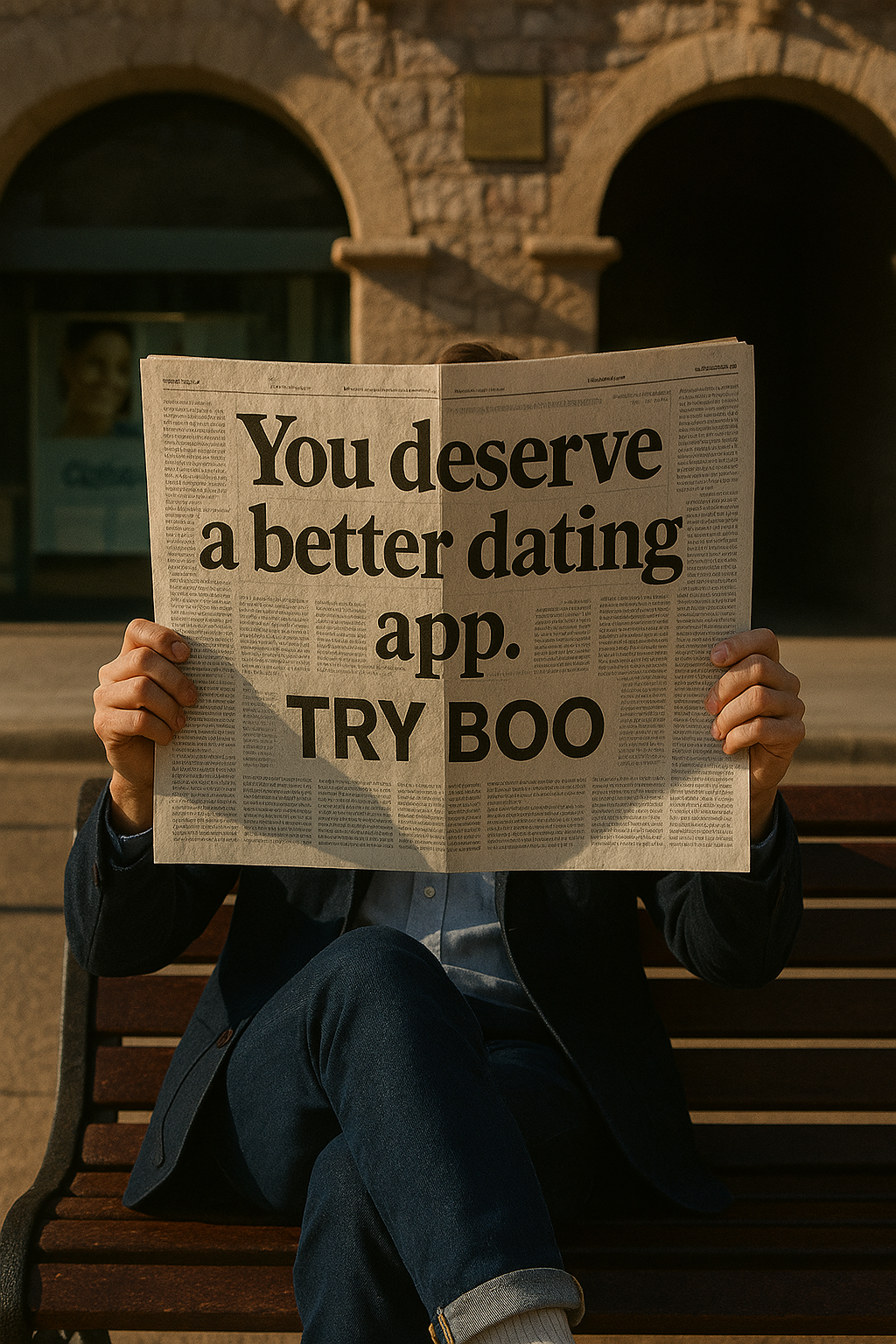
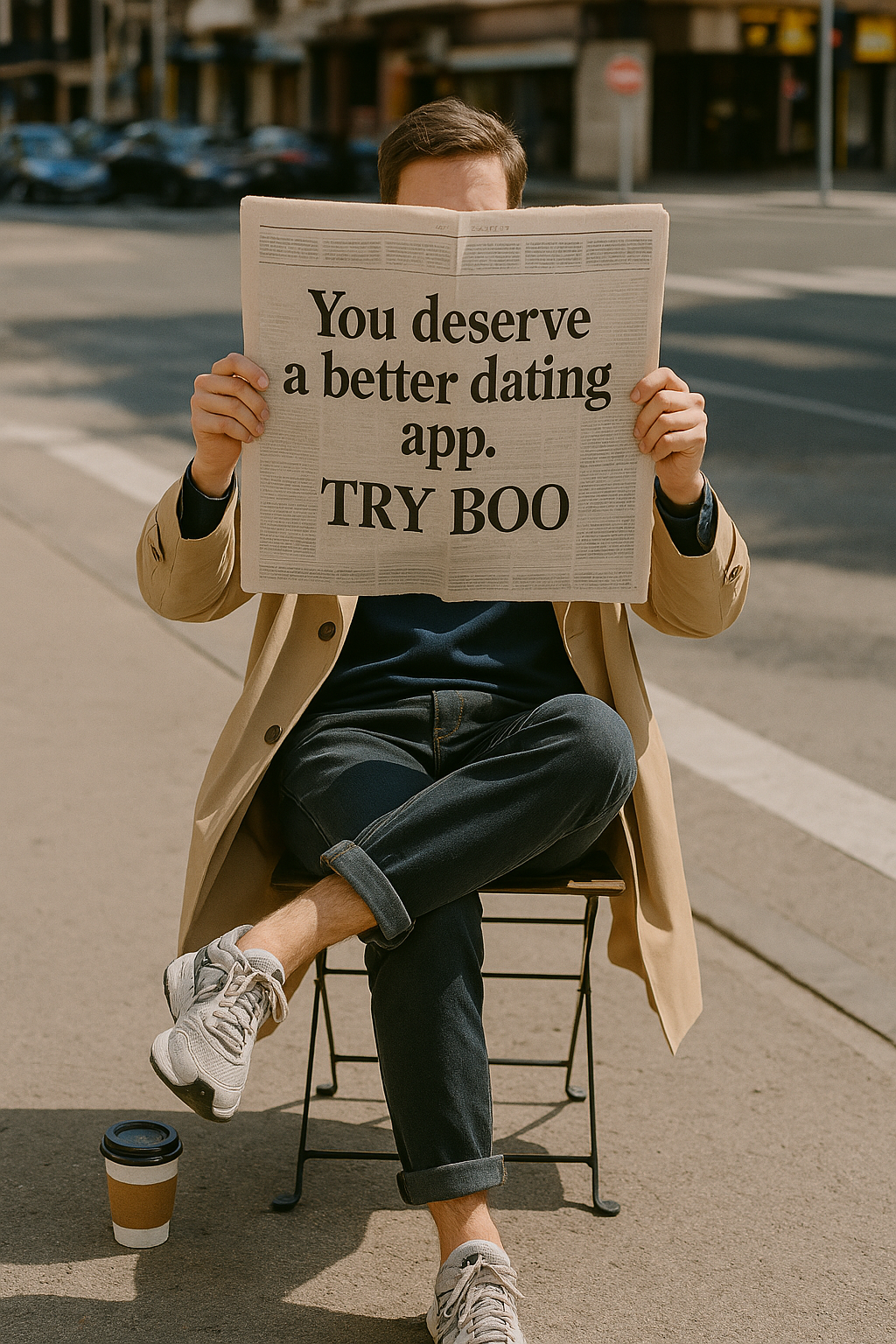
Static · AI-generated image · Midjourney · first AI-produced asset
"You deserve a better dating app. Try Boo."
PSA-style framing borrowed credibility from public interest messaging. The copy came first. The format was chosen to make it feel like a statement, not an ad. This was also the first asset built using AI-generated imagery. It proved the production method. The concept proved everything else.
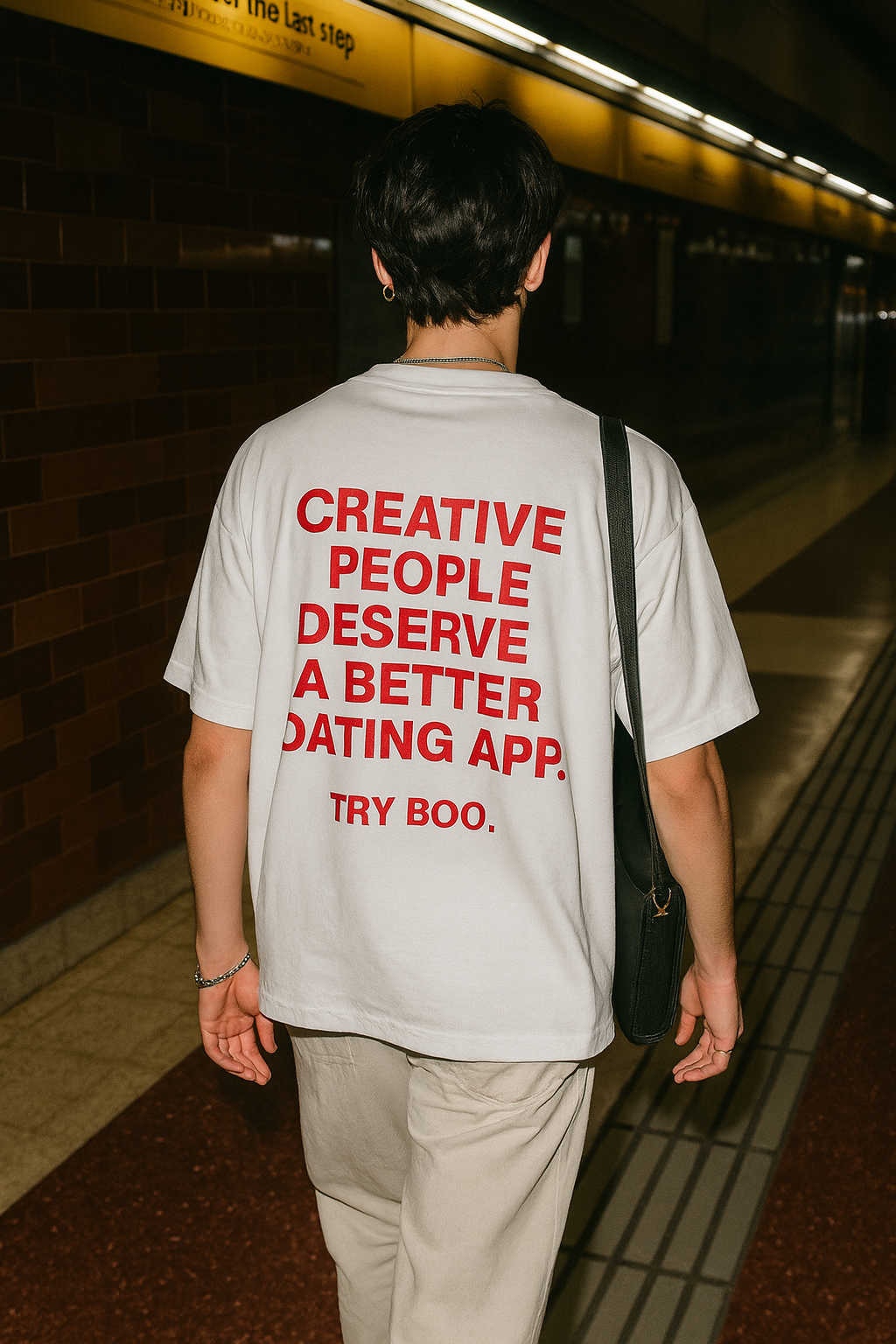
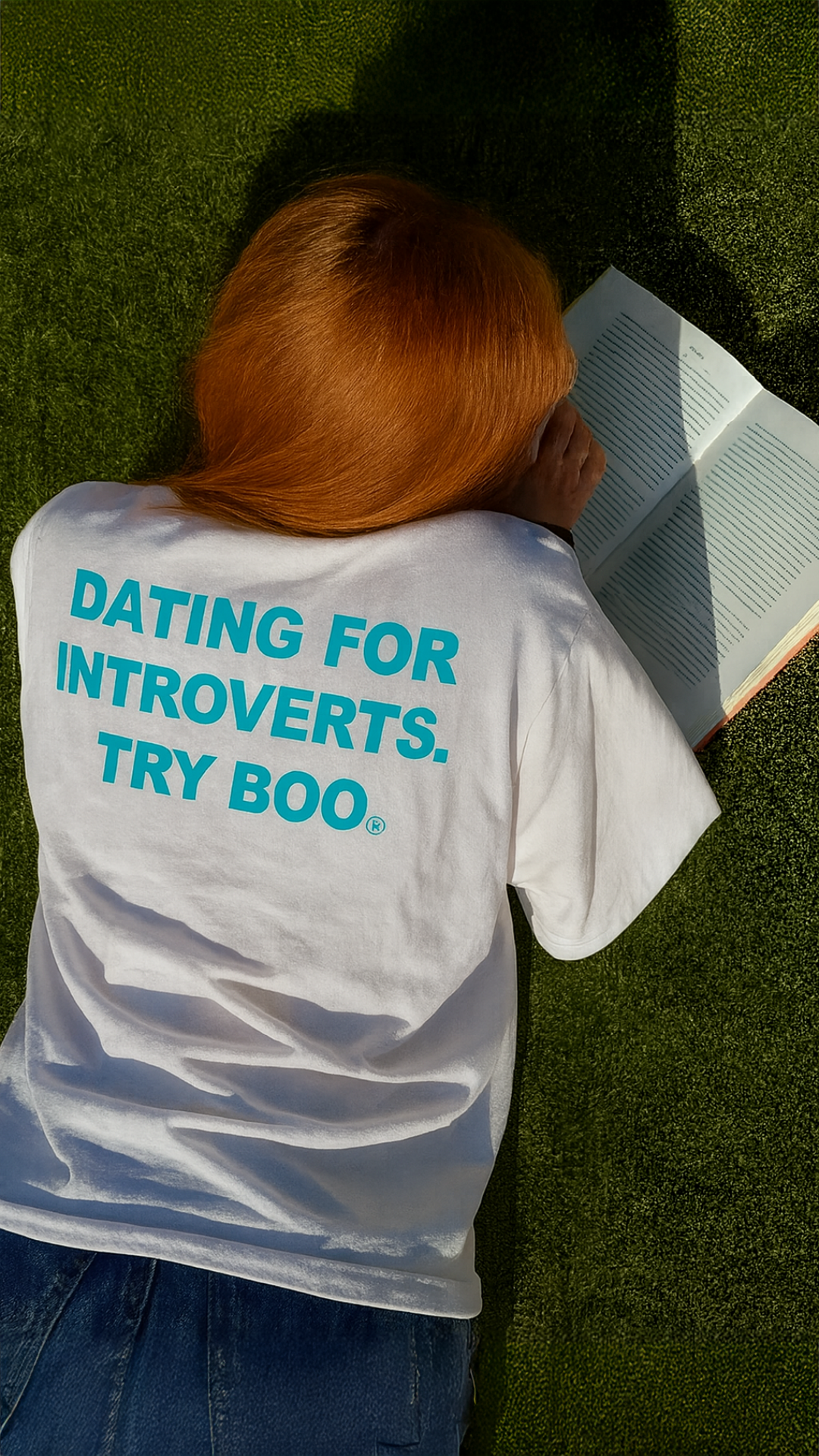
Static · lifestyle photography · two variants · creative & introvert niches
"Creative people deserve a better dating app." / "Dating for introverts. Try Boo."
Same winning formula, different visual register. Where the newspaper felt civic and PSA-led, the t-shirt concept speaks identity: something you'd wear, not just read. Two variants, two distinct sub-audiences, one shared strategic logic: you deserve better.
Section 02 · The iteration proof
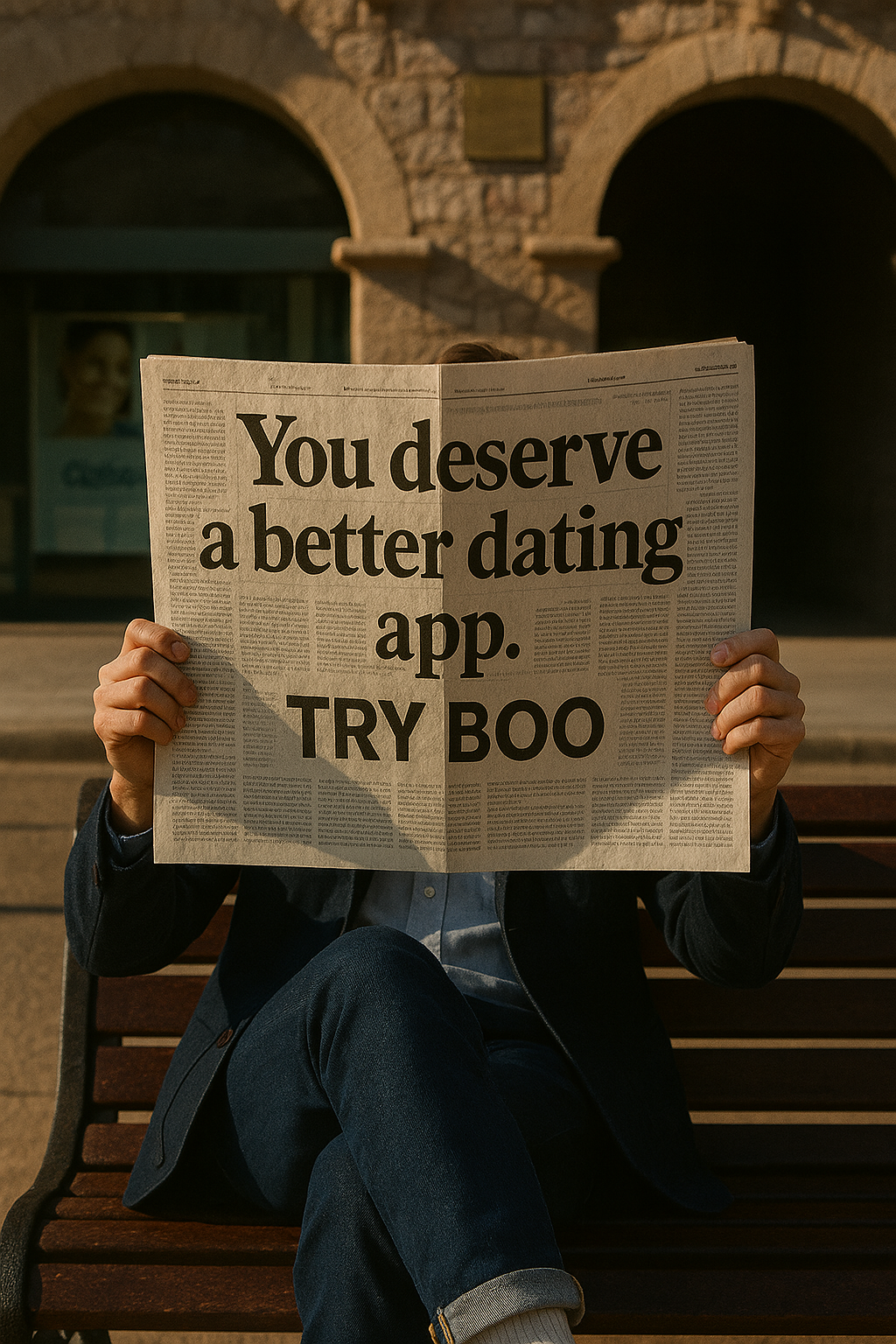
When a concept performed, the brief wasn't "make a new ad." It was "what else can this become?" Every winning asset was broken down into variables: hook, visual style, format, copy, pacing. Then systematically remixed. One insight, multiplied across formats, niches, and production methods.
We tested 10–20 new creatives weekly, using ROAS as the primary signal. Once the newspaper concept hit 3.2x, it became the base for an entire creative family.

Iteration pair · static → video · same concept, two formats
Same concept. Two formats. Both won.
The static became a short video. The short video became a UGC hook. The formula didn't change. The container did. This is the physical evidence that the system worked: one proof of concept spawned a creative family, not a one-off.
Style iteration · niche-adapted · AI-generated · Midjourney · signage/PSA format
Same copy. Three worlds. Each one native to its audience.
"[Niche] deserve a better dating app. Try Boo Today." The signage format stayed constant. The visual world changed completely: cyberpunk Tokyo for otakus, pixel-art streets for gamers, Stardew Valley warmth for gamer girls. This is what scaling a concept looks like without diluting it.
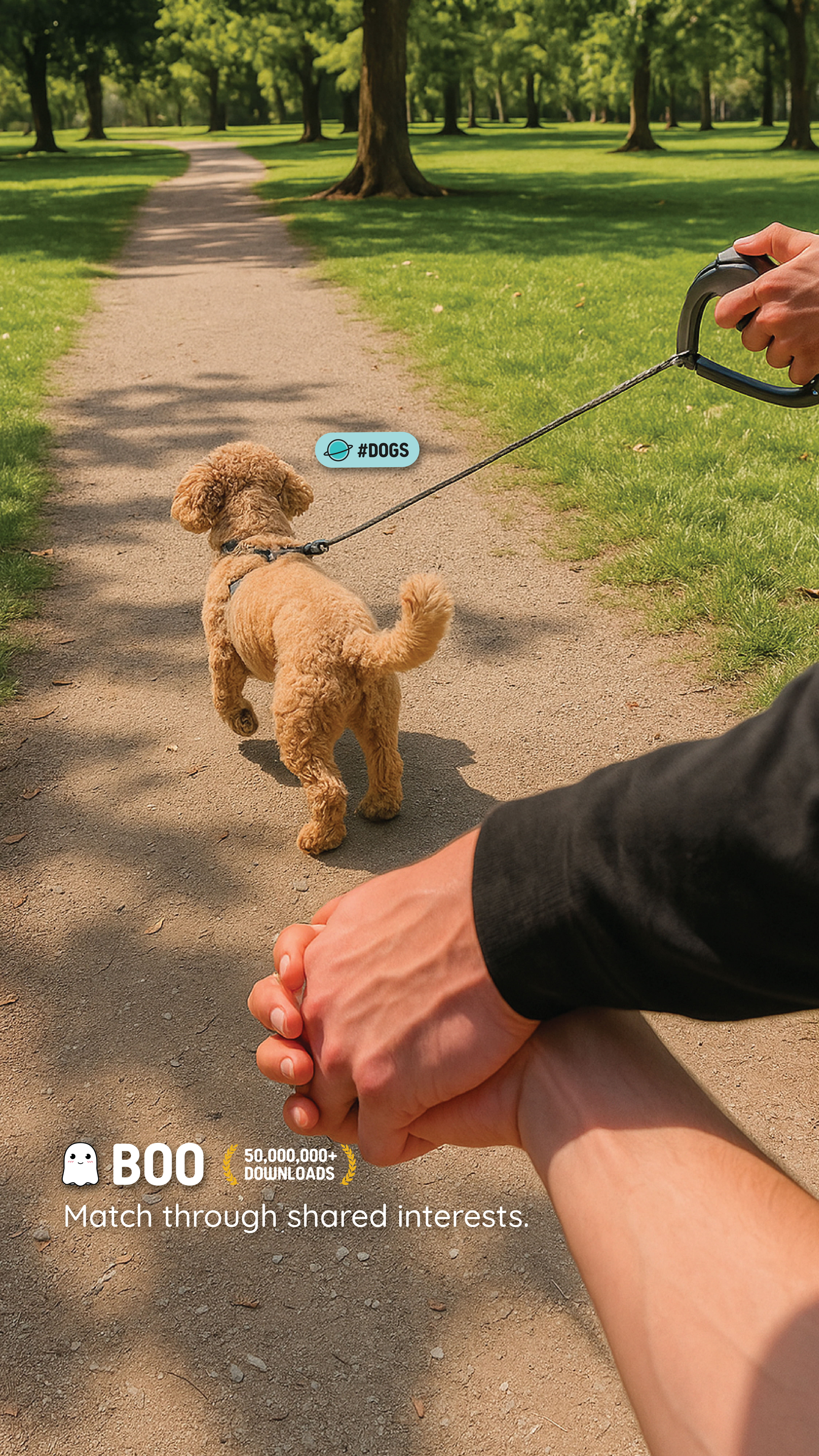
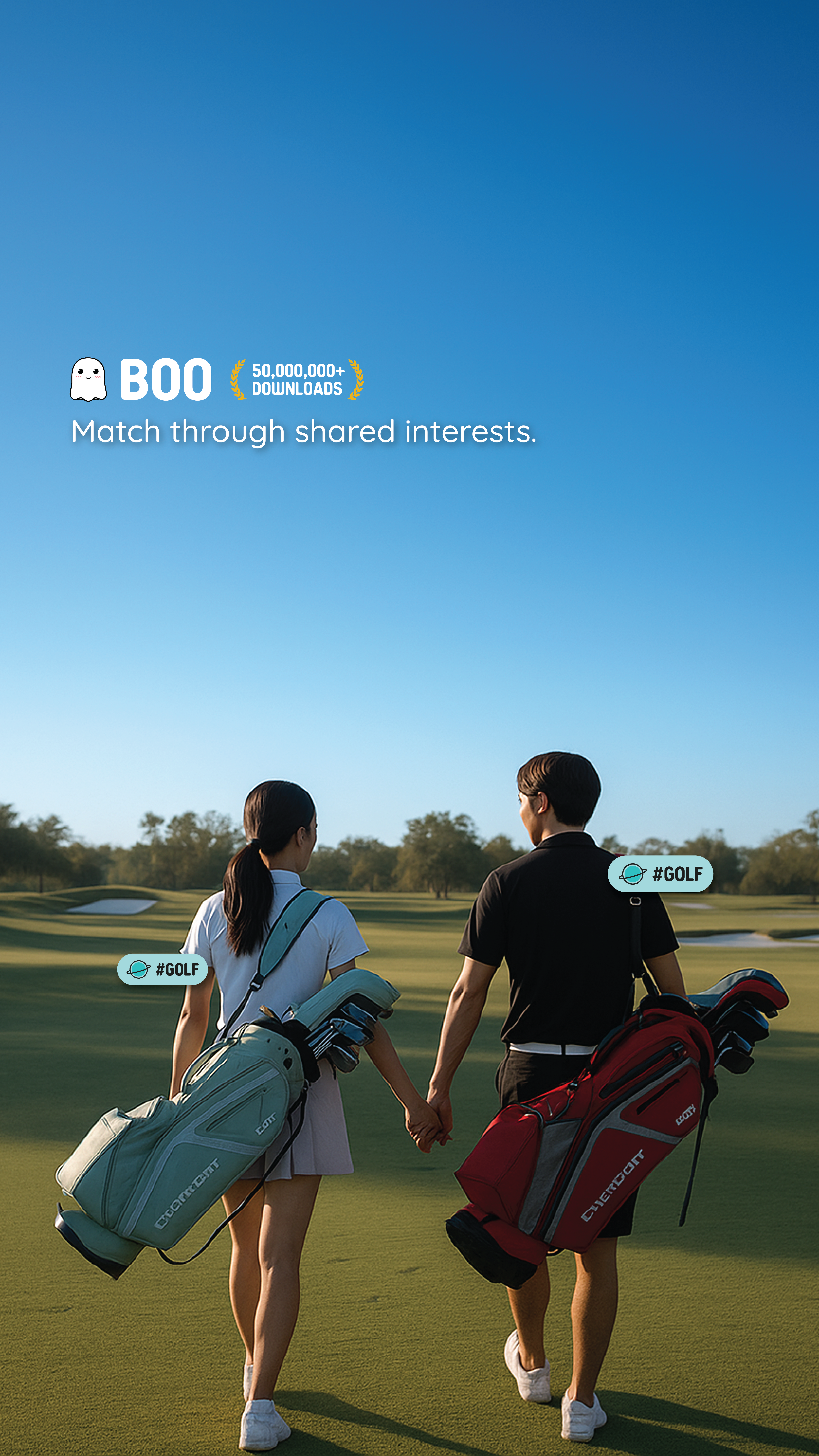
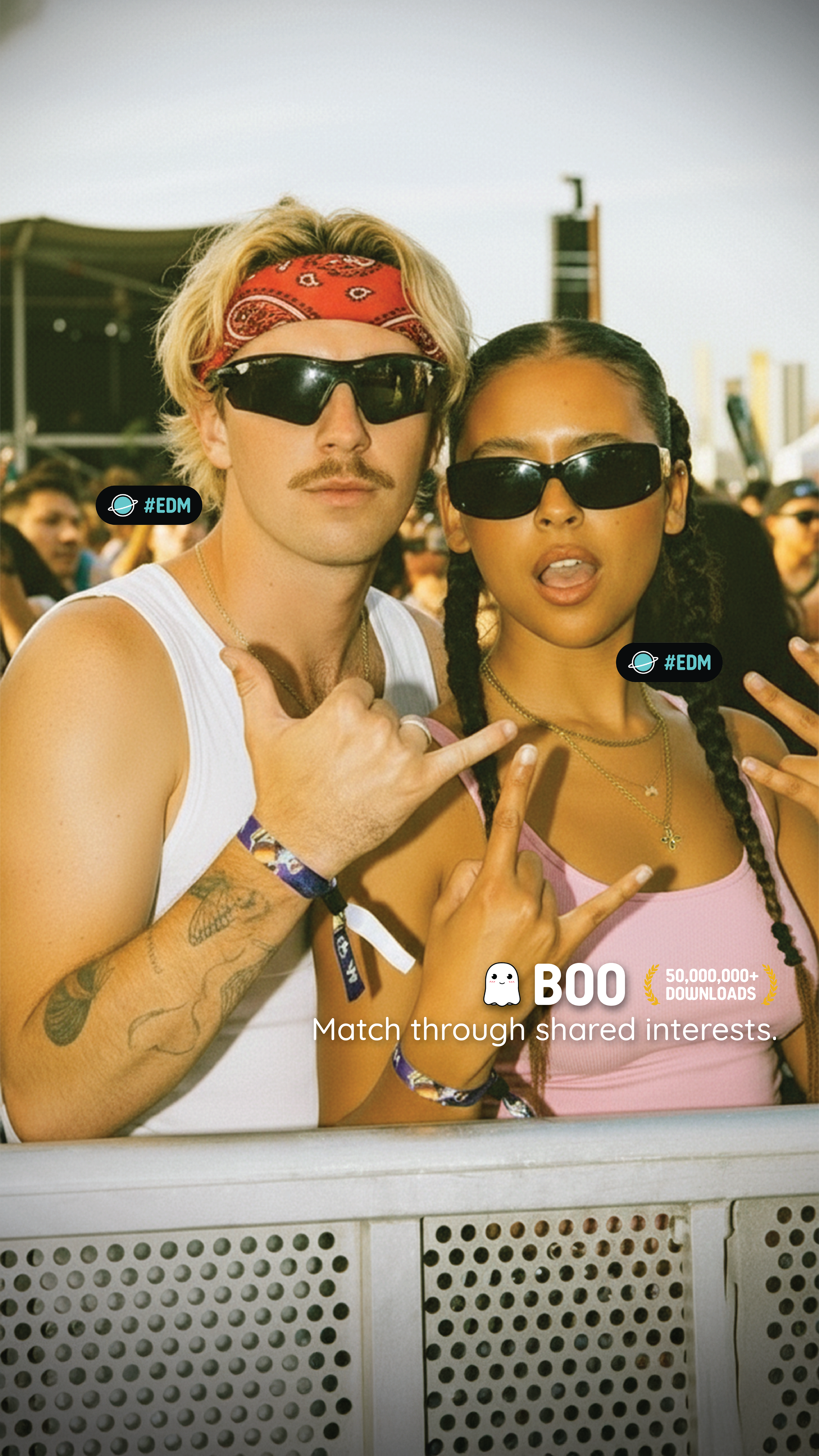
Static grid · interest-based matching · lifestyle photography · multi-niche
From personality match to interest match. 100+ niches tested. 20 that worked.
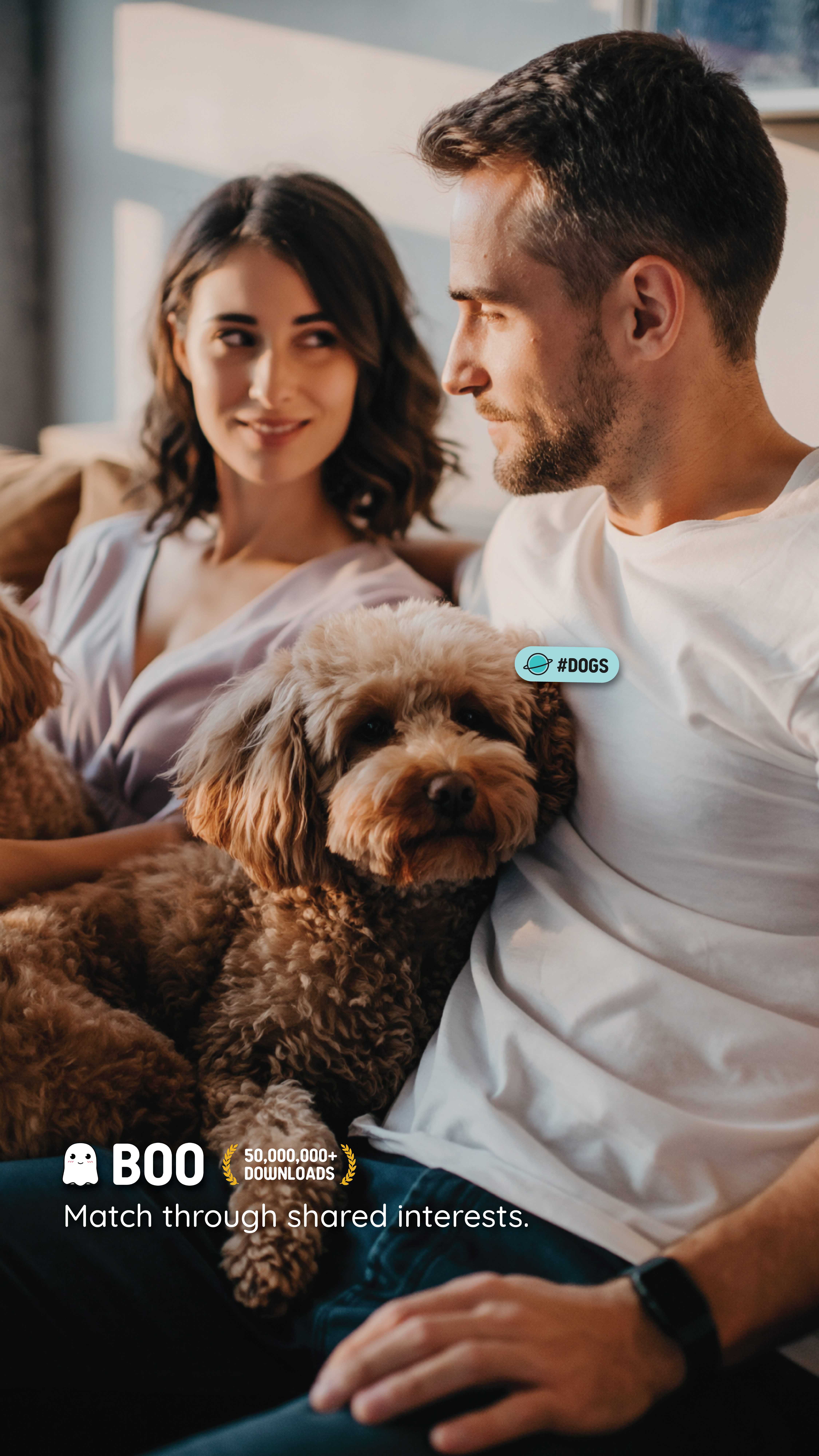
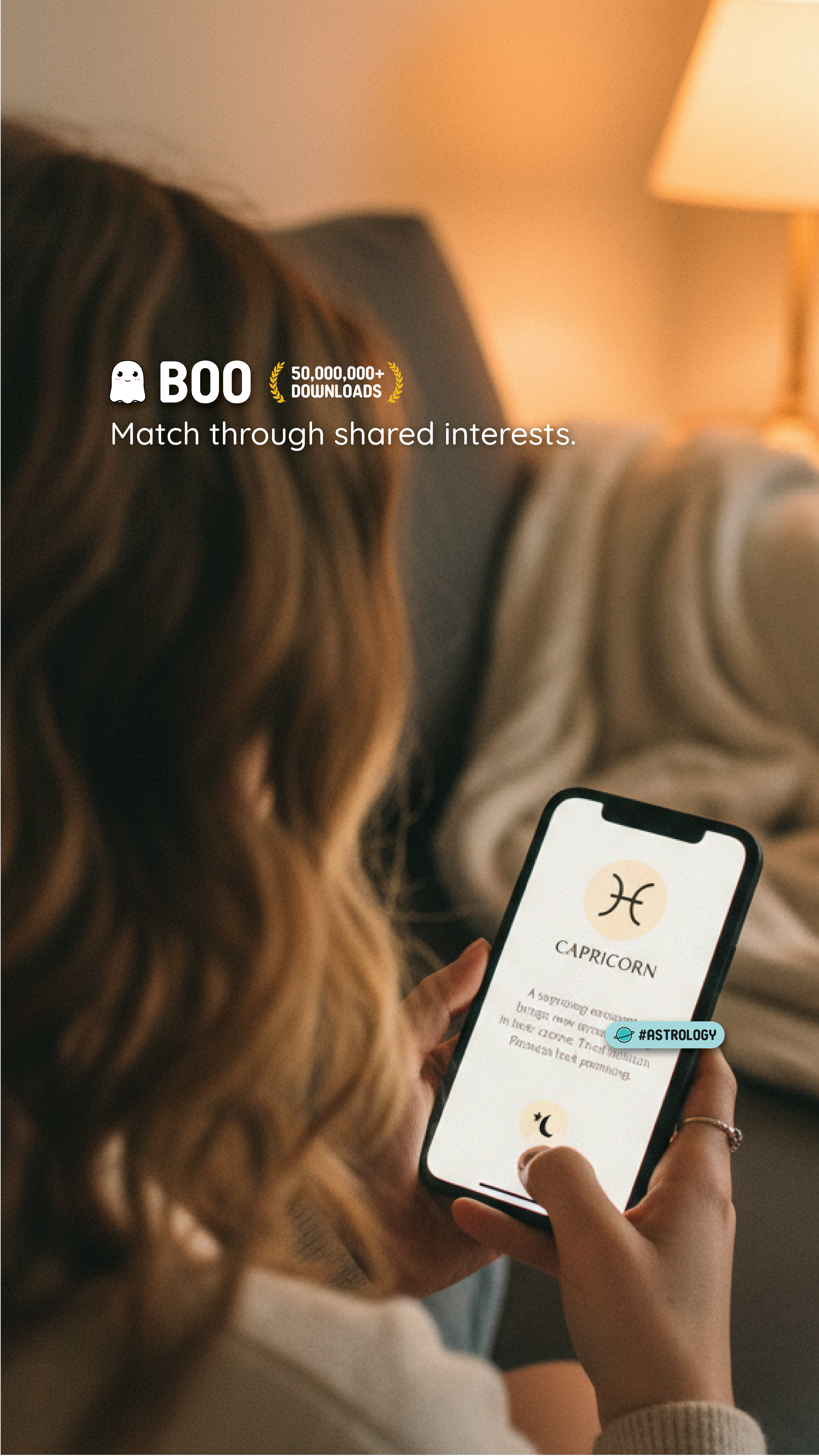
When the positioning shifted from MBTI personality to shared interests, the creative brief changed too. Each ad spoke to a specific shared passion: dog owners, golfers, concert-goers, travellers. The same product, re-introduced to 20 different audiences who'd never felt like it was for them.
The niche creative system ran in parallel streams. Each subculture got its own visual language, not a reskin of the same template.
Anime & gaming
Illustration-led, animation-native. Looked like content they already loved.
Introverts
Cozy, slow, intimate. No urgency. Just the feeling of being in the right place.
Lifting & fitness
Motivational, high-energy. Spoke the language of the gym.
Music
Curated, tasteful, culturally aware. Never tried too hard.
Section 03 · Culture-led concepting
The best-performing ads weren't invented from scratch. They were built on references people already had an emotional relationship with. Spoofing iconic campaigns for instant recognition: the format does the strategic heavy lifting, the writing makes it feel like Boo's own.
Video · three niche variants · Suno AI music · concept, script, creative brief, production oversight
"Just Boo It" — one spoof, rebuilt for three audiences.
Built on one of the most recognised taglines in advertising history. When people see the format, they finish the thought before the copy does, and that moment of recognition is exactly when they're most receptive. Same tagline, three worlds: general, anime, lifting. Each retuned so it felt native rather than imported. Suno AI handled the audio. The strategic logic handled the rest.
2D animated video · two niche variants · ElevenLabs VO · Suno AI music · creative brief, direction, production oversight
"Get a Match" — a witty brand comparison, adapted for gaming too.
Apple's "Get a Mac" format is engineered for comparison: it makes the contrast feel inevitable and slightly absurd at the same time. The format did the strategic heavy lifting; the writing made it feel like Boo's own. One version for general, one retuned for gaming. Proof that even reference-led formats need to be rewritten for each audience to hit. ElevenLabs handled voiceover at a fraction of traditional production cost and time.
Section 04 · AI & UGC production system
Volume without structure is noise. I integrated ChatGPT, Claude, Gemini, Google Veo, and HeyGen into the production workflow: generating hook variations, reworking winning scripts, producing and remixing assets at a volume no human team could sustain alone. Performance data fed back into the prompts, making outputs sharper over time.
The result: production time dropped from 2–3 weeks to under a week. Output scaled to ~1,000 creatives weekly. AI doesn't replace creative judgment. It amplifies it. The prompts that produced the best outputs came from deep understanding of what we were actually trying to make.
Video pair · AI UGC vs human UGC · HeyGen · n8n automated script generation
100 UGCs a week. AI and human production running side by side.
Automated script generation via n8n, avatar production via HeyGen, minimum human editing at the end. Placing AI and human UGC side by side isn't a flex. It's evidence that the production floor scaled without the quality floor dropping.
AI UGC · split-screen gameplay format · streamer-native
AI UGC tuned to how the audience already watches.
Split-screen gameplay is the default visual grammar for streamer-facing content. Producing AI UGC in that exact format meant the ad didn't interrupt the feed. It extended it.
AI iteration · original vs remake · concept validation across production methods
A winning concept rebuilt with AI. Both performed.
When I joined, there were winning assets with no iterations. The AI remake test answered a real question: does the concept hold when the production method changes? It did. Every proven concept was now a candidate for AI-scaled production.
Final creative · AI-generated end-to-end · multi-direction · shipped to platforms
Four final ads. Four directions. All AI-produced, all shipped.
Not tests, not mood frames. These are final creatives that ran in market, produced end-to-end with AI. The same production method that let us test concepts cheaply was the production method that shipped them. AI isn't a rehearsal stage. It's the stage.
Section 05 · Full funnel creative ownership
Getting someone to click an ad is one conversion. Getting them to install after seeing the store page is another. Getting them to feel, within the first 30 seconds of opening the app, that this was made for them. That's the third. I owned all three.
In-app video · script + creative direction · niche-personalised · per-audience versions
The ad brought them in. The onboarding video made them feel like they'd arrived somewhere made for them.
If someone saw an anime ad, the app opened with an anime onboarding video. The creative thread didn't break at install. It deepened. This is the part of the funnel most performance teams never think about.
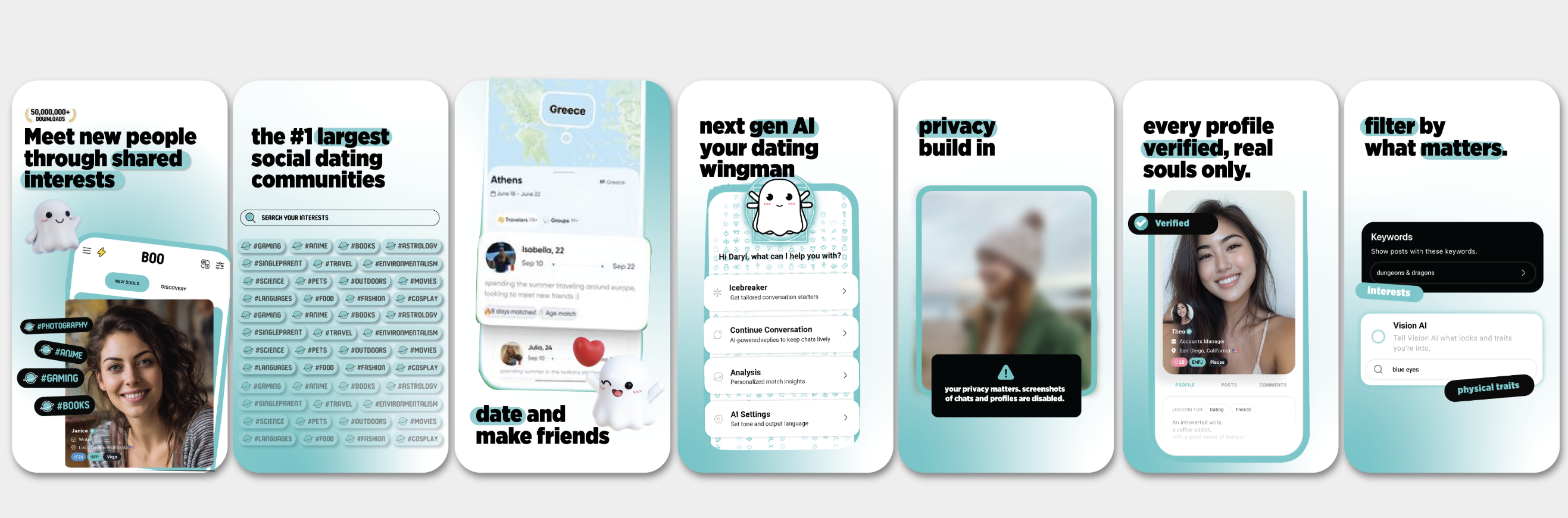
App Store Optimisation · copy + creative direction · 7 screenshots · interest-based positioning
The app store page is a landing page. I treated it like one.
New copy, new visual system, new messaging hierarchy for the App Store listing, built around the interest-based positioning shift. The creative thread that started in the ad needed to continue at install. If the store page told a different story, the whole funnel broke.
Section 06 · The team
None of this worked without the people running it. I hired, onboarded, and managed a 27-person cross-functional team of designers, video editors, copywriters, and strategists across multiple time zones and markets including the US, LATAM, Eastern Europe, and SEA.
Managing a remote creative team at this scale isn't logistics. It's keeping everyone aligned on a creative vision they can't see yet. Briefing into uncertainty, building trust across time zones, making sure the 14th iteration of an ad concept still gets the same care as the first. I reported directly to the founder. The creative decisions I made were also business decisions. I treated them that way.
Section 07 · The volume proof
System artefact · production at scale · 1,865 active creatives / 30-day period
1,865 active creatives. 131.7M impressions. $2.09 CPM. One team. One system.
Four outro variants. Tested. Iterated. Nothing in this operation was made once and left alone. Every component (hook, visual, copy, outro) was a variable in the system. If you can screenshot your Motion dashboard showing the 1,865 active creative count, use that here. That number as a visual lands harder than any description of it.
What I learned
Hook variation had more impact on performance than almost anything else. The same visual could live or die based on the first three seconds.
Iteration consistently outperformed net-new concepts. The best ideas weren't invented — they were refined.
Visual style mattered differently across niches. What felt native to an anime audience felt jarring to a fitness audience. The system only worked because it was built with that specificity from the start.
AI doesn't replace creative judgment. It amplifies it. The prompts that produced the best outputs came from deep understanding of what we were actually trying to make. Garbage in, garbage out. Always.
Repositioning is a creative act as much as a strategic one. The shift from "nobody wants me" to "nobody understands my world" sounds subtle. It changed everything.
What started as a brief to scale an app became something more interesting: a proof of concept that creative strategy, run well, is a growth function. Not a support function. Not a nice-to-have. The thing that actually moves the number.